
Hip surgery · Alicante · Spain
Bilateral Hip Replacement in Alicante, Spain: One Operation or Two?
When both hips are significantly affected, the decision goes beyond choosing an implant: it involves assessing when to treat each side and how to organise recovery.
Updated 14 November 2026 · 5 min read
The key decision
Bilateral total hip replacement can be performed in one operation or in two separate procedures. The choice depends on the symptoms in each hip, general health, anaesthetic assessment and support available during recovery.
One operation or two separate procedures
Bilateral total hip replacement means replacing both hip joints. Simultaneous surgery treats both hips during the same operation and anaesthetic. Staged surgery treats each hip in a separate operation.
A simultaneous approach brings both procedures together, but involves a longer operation than replacing one hip and may increase blood loss and perioperative demands. It requires careful patient selection. Staging separates the operations and recovery periods; the interval is planned individually.
| Aspect | Simultaneous: one operation | Staged: two operations |
|---|---|---|
| Surgical pathway | Both hips during one anaesthetic. | Each hip during a separate operation. |
| Recovery organisation | Both hips enter rehabilitation together; support must be planned for this. | Recovery is organised in two periods, reviewing progress before the second operation. |
| Clinical assessment | Requires assessing tolerance of the combined procedure. | Allows reassessment of health and recovery between procedures. |
| Timing | A single surgical admission, with the plan agreed individually. | The interval depends on recovery, symptoms and medical assessment. |
How is the strategy assessed?
Pain, mobility and imaging are reviewed for each hip, alongside medical history, general health and the anaesthetic assessment. Needing treatment in both hips does not automatically mean that both should be operated on together.
The consultation with Dr David Fernández-Fernández provides a framework to discuss the findings, alternatives, surgical planning and the practical support available during recovery. The decision is shared with the patient and coordinated with the treating hospital team.
Planning recovery and support
Before treatment, discuss walking aids, physiotherapy, help at home and follow-up. For staged surgery, the second procedure is reviewed in the context of recovery from the first. There is no single timetable suitable for every patient.
The consultation also covers complications such as infection, blood clots, bleeding or dislocation and how the care team plans prevention and monitoring. Recovery depends on the individual clinical situation.
Patients travelling to Alicante
For patients travelling from abroad, discuss the proposed number of operations, hospital care, accommodation, accompanying support and follow-up before arranging travel. The plan should clarify what is organised in Spain and how continuity of care will work after returning home.
Planning both hips as one reconstruction
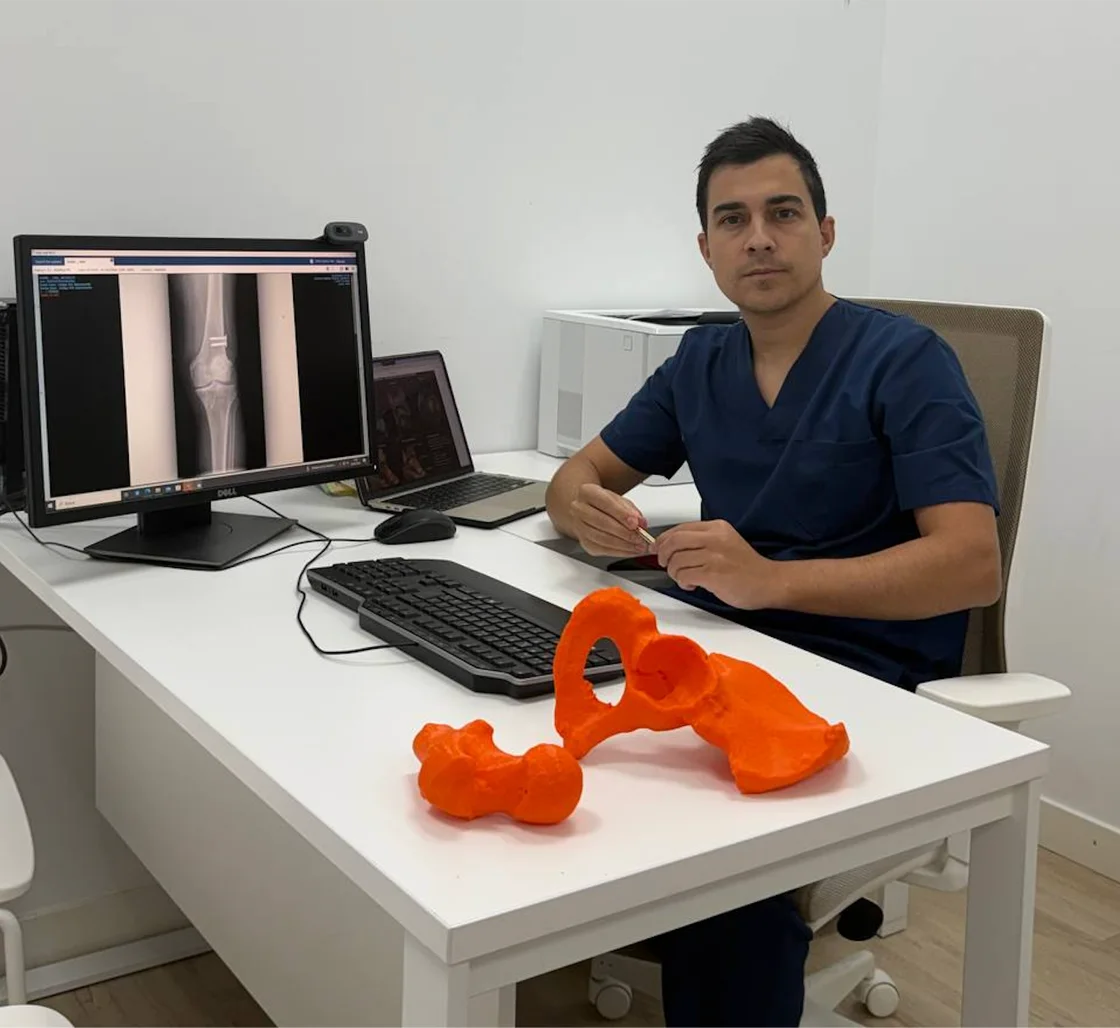
Bilateral hip surgery requires a plan for each side and a view of the pelvis as a whole. X-rays and, when indicated, three-dimensional planning help assess anatomy, implant dimensions, leg length and offset. The objective is an individual reconstruction rather than using identical implants on both sides.
The surgical approach and implant strategy depend on anatomy, bone quality, previous surgery and the hospital setting. Minimally invasive surgery or technological assistance does not, by itself, determine whether both hips should be replaced during the same operation.
Frequently asked questions
Can both hips be replaced during one operation?
It is an option for selected patients after surgical and anaesthetic assessment. The indication must be considered individually.
How long should I wait between staged operations?
The interval is agreed according to general health, recovery of the first hip and the care plan. Progress is reviewed before scheduling the second procedure.
Is simultaneous surgery always the best option?
No. The choice between simultaneous and staged surgery depends on the patient’s clinical situation and the treating team’s assessment.
Clinical reading and references
- Yale Medicine — Simultaneous Bilateral Total Hip Replacement
- Simultaneous versus staged bilateral total hip arthroplasty: systematic review and meta-analysis
Educational information to prepare for a consultation. Indication and planning require individual clinical assessment.
← DF Trauma Journal